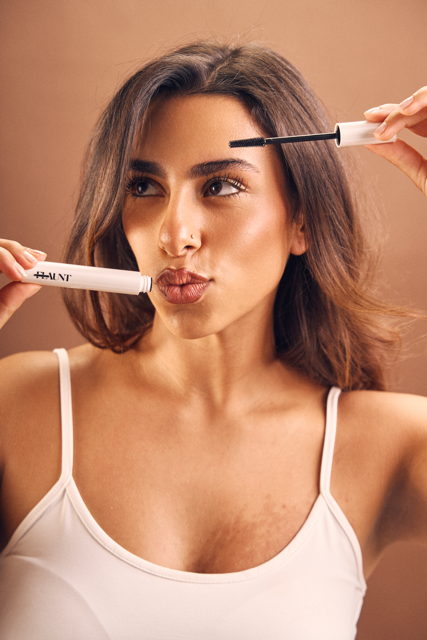
The Humidity Paradox: Mastering Waterproof Eyeliner Stamps for Dubai’s Autumn
Waterproof eyeliner stamps stay put in Dubai’s autumn weather when you stop treating humidity as an enemy and start treating it as a chemical variable. The secret to a smudge-proof gaze during the transition from October to December isn't just the product—it's the preparation of the skin's surface and the timing of the set. To prevent the dreaded "raccoon eye" in 80% humidity, you must create a hydrophobic barrier between your skin's natural oils and the pigment of the eyeliner stamp.
The Science of the Smudge: Why Dubai Autumn is Unique
Humidity is defined as the concentration of water vapor present in the air. In Dubai's autumn, this creates a specific challenge: the air is saturated, which slows the evaporation of moisture from your skin and prevents many beauty routine products from "setting" or drying down completely. When an eyeliner stamp is applied to a humid eyelid, the moisture acts as a solvent, breaking down the waterproof polymers before they can bond to the skin.
Most people assume that "waterproof" means "invincible." It does not. Waterproof formulas are designed to repel liquid water, but they can still be dissolved by sebum (skin oil) and emulsified by the friction of blinking in a humid environment. The goal is not just to use a waterproof product, but to manage the environment where that product sits.
Key Takeaway: Waterproof formulas resist water, but humidity-induced sebum is what actually causes eyeliner stamps to migrate.
The Pre-Application Protocol: Creating the Hydrophobic Base
The success of an eyeliner stamp depends entirely on what happens before the stamp touches your skin. If you apply pigment directly to a bare, humid eyelid, you are applying it to a moving target of oil and moisture.
The De-Greasing Phase
Before starting your beauty routine, use a gentle, oil-free micellar water to cleanse the eyelid. Even if you have already washed your face, the eyelids produce a specific type of sebum that can act as a barrier. Ensuring the skin is "squeaky clean" allows the polymers in the eyeliner stamp to grip the skin directly rather than floating on a layer of oil.
The Priming Layer
A dedicated eye primer is not optional in Dubai; it is the foundation. Look for primers that offer a "matte" finish. These products contain silica or other absorbent minerals that soak up excess moisture and oil throughout the day. By creating a dry, velvet-like surface, you provide the eyeliner stamp with a stable anchor.
The Setting Powder Shield
For those with oily lids, a technique called "sandwiching" is the most effective defense. After priming, dust a translucent setting powder over the lid. This creates a physical barrier. When you apply your eyeliner stamp over this powder, the powder absorbs any breakthrough humidity, keeping the liner crisp.
Key Takeaway: A clean, primed, and powdered lid is the only way to ensure an eyeliner stamp remains stationary in high humidity.
Precision Application: Using the Eyeliner Stamp Effectively
The eyeliner stamp is a tool of efficiency, but its application requires a specific rhythm to survive the Dubai climate. The "stamp-and-set" method is the gold standard for longevity.
The Stamp-and-Set Method
Instead of simply stamping and walking away, follow this sequence:
- Stamp: Press the eyeliner stamp firmly against the lash line, holding for two seconds to ensure full pigment transfer.
- Define: Use the accompanying liner pen to connect the wing to the inner corner.
- Set: Immediately after the liner is applied—while it is still slightly tacky—press a tiny amount of matching black or brown eyeshadow over the line using a flat brush.
This process, known as "locking," uses the powder to encapsulate the liquid liner. The powder acts as a sealant, making it significantly harder for humidity to penetrate the formula.
The Angle of Attack
In humid weather, the skin of the eyelid becomes slightly more supple and prone to stretching. To avoid jagged lines, tilt your head back and look slightly downward into a mirror. This stretches the eyelid naturally, allowing the eyeliner stamp to hit the skin flush without creating folds that could later become "leak points" for smudging.
Key Takeaway: Locking your eyeliner stamp with a matching powder eyeshadow creates a dual-layer defense against humidity.
Troubleshooting Common Autumn Failures
Even with the best tools, the fluctuating temperatures of a Dubai autumn—where you move from 35°C outdoor humidity to 20°C indoor air conditioning—can cause product instability.
The "Transfer" Effect
If you notice your eyeliner stamp transferring to your upper brow bone, it is usually a sign of "migration." This happens when the product hasn't fully cured. To prevent this, avoid blinking rapidly for 30 seconds after application. Give the polymers time to cross-link and harden.
The "Fade" Phenomenon
Some waterproof formulas don't smudge; they simply fade. This is often caused by the high salt content in sweat during the humid autumn months. To combat this, ensure you are using a formula specifically labeled as "smudge-proof" and "waterproof," as these are two different chemical properties. Smudge-proof formulas are designed to resist friction, while waterproof formulas resist liquid.
The "Cracking" Issue
Over-powdering the lid to fight humidity can sometimes lead to the eyeliner stamp cracking as the skin moves. If this happens, reduce the amount of setting powder and switch to a hydrating but oil-free primer. The goal is balance: enough dryness to prevent smudging, but enough flexibility to prevent cracking.
Key Takeaway: Distinguish between smudging (oil-based) and fading (salt/sweat-based) to choose the right corrective measure.
The Removal Ritual: Protecting the Delicate Eye Area
Because waterproof eyeliner stamps are designed to withstand the harshest conditions, they can be stubborn to remove. Using harsh scrubbing motions can damage the thin skin of the eyelid, leading to inflammation and making future beauty routines more difficult.
The Oil-Based Solvent
Waterproof formulas are hydrophobic, meaning they repel water. To break them down, you need a lipophilic (oil-loving) solvent. A cleansing balm or a bi-phase oil remover is the most effective choice.
The "Soak and Slide" Technique
- Saturate a cotton pad with an oil-based remover.
- Press the pad against the closed eyelid and hold it there for 20 to 30 seconds.
- Do not rub. Instead, gently slide the pad outward toward the temple.
This allows the oil to dissolve the waterproof polymers without requiring physical friction. This preserves the skin barrier, ensuring your eyelids remain smooth for the next day's application.
Key Takeaway: Never scrub waterproof eyeliner stamps; use a "soak and slide" method with an oil-based cleanser to protect the skin.
Guidance for the Makeup Beginner
If you are a makeup beginner, the prospect of a perfect wing in a humid climate can feel intimidating. The eyeliner stamp was designed to remove the guesswork, but a few mental shifts can make the process easier.
First, accept that symmetry is a goal, not a requirement. Use a cotton swab dipped in micellar water to sharpen the edges of your stamp. It is much easier to remove a small amount of excess product than it is to add more to a thin line.
Second, practice your "stamp angle" on the back of your hand. Understand how much pressure is needed to get a crisp imprint without smearing. Once you find that pressure point, transferring the skill to your eyelid becomes a matter of muscle memory.
Third, start with a thinner wing. In high humidity, a massive wing has more surface area to potentially smudge. A tight, precise line is more likely to survive a day at the Dubai Mall or a walk on the Jumeirah beach than an oversized architectural wing.
Key Takeaway: Use a "subtractive" approach—stamp slightly larger than needed, then sharpen with a swab for professional precision.
Frequently Asked Questions
Q: Can I use a regular eyeliner stamp if I use a very strong primer? A: While a strong primer helps, a non-waterproof eyeliner stamp lacks the specific polymers required to resist the moisture levels of a Dubai autumn. For guaranteed longevity, the formula itself must be waterproof.
Q: Does the temperature change from outdoors to AC affect my eyeliner? A: Yes. Rapid temperature shifts can cause "condensation" on the skin. This is why the "locking" method (using eyeshadow over the liner) is so critical; it creates a buffer that prevents the liner from reacting to the sudden temperature drop.
Q: How often should I replace my eyeliner stamp? A: For hygiene and performance, replace your stamps every three to six months. Over time, the stamp can collect residue or the formula can dry out, leading to uneven application and a higher likelihood of smudging.
Q: Is it better to apply the eyeliner stamp before or after eyeshadow? A: For the most durable result, apply your eyeshadow first. This ensures that any powder fallout is already on the lid, and your eyeliner stamp will sit on top of the beauty routine as the final, sealed layer.
Elevate Your Gaze
Mastering your beauty routine in Dubai's autumn is about understanding the intersection of chemistry and climate. By prepping the skin to be hydrophobic, using the stamp-and-set method, and removing the product with care, you transform your eyeliner from a source of stress into a source of confidence.
Ready to redefine your look? Explore the latest in precision tools and long-wear formulas at Flaunt Cosmetics Global and find the perfect eyeliner stamp to conquer the humidity.